The Challenge
Rural health centers left in the dark.
Due to limited and lack of government funding, rural areas in Cameroon lack proper health facilities to care for women during pregnancy, labour and the post-partum period. Infants and children under five also suffer for lack of appropriate medical support.
70% of rural health facilities have no electricity. Without lighting, patient care after dark is impossible; without refrigeration, life-saving drugs and vaccines cannot be stored safely; and sterilization is not feasible. Generator fuel is expensive and often unavailable, and qualified nurses are difficult to recruit and retain in sub-standard facilities.

690
maternal deaths per 100,000 live births.
The WHO target is fewer than 70.

70%
of rural health facilities in Cameroon
are not connected to electricity.


60
under-five deaths per 1,000 live births.
In Mbah and Dom, women still deliver at home because of the distance to Ndu District Hospital, poor roads, lack of transport and limited health education.
The Context
Mbah and Dom.
Mbah and Dom are remote rural communities where women still deliver at home, because of the distance to Ndu District Hospital, poor roads, lack of transport and limited health education. Child mortality from preventable causes such as malaria, diarrhoea, pneumonia and malnutrition remains high.
That is the gap this project was designed to close: bring safe, lit, equipped care to the village, and make the journey to Ndu possible when a referral cannot wait.
Project facts
- Location
- Kumbo, Bui Division, North West Region, Cameroon
- Facilities
- Mbah and Dom Integrated Health Centres
- Referral hospital
- Ndu District Hospital
- Partner
- Rotary Club of Kumbo
- Handover
- Saturday 4 May 2019, Kumbo
Objectives
What we set out to do.
Solar power
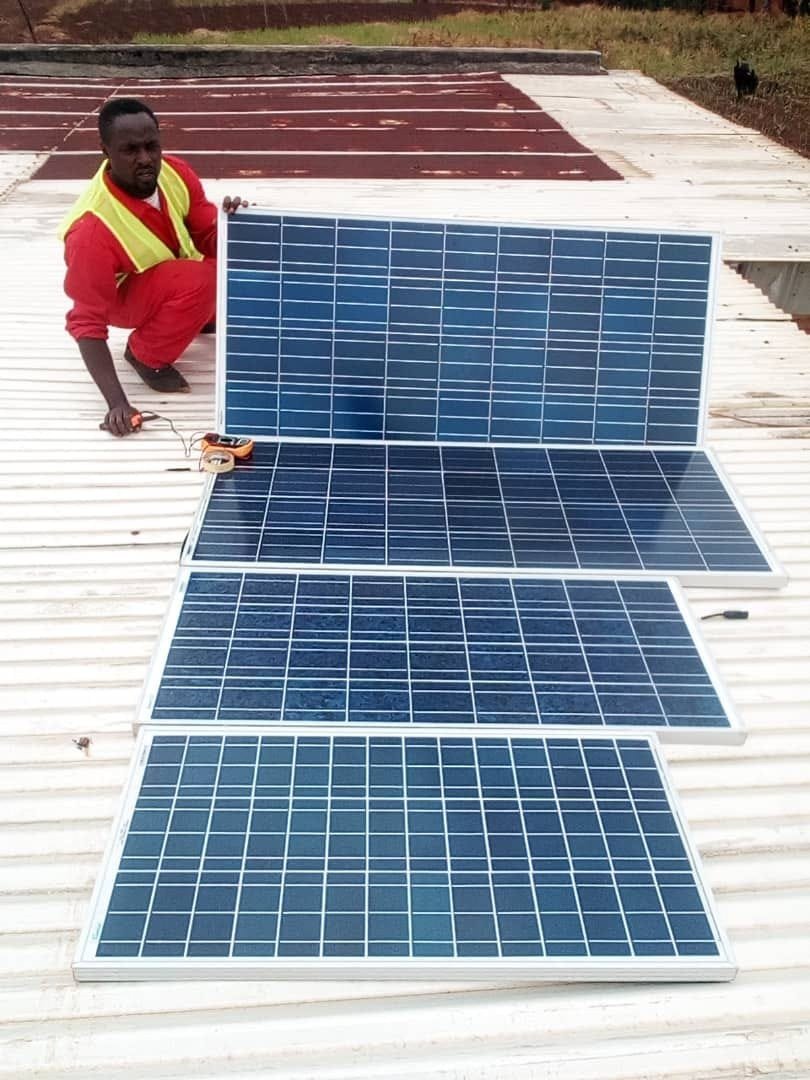
Solar electricity for light and refrigeration at two existing rural health centers.
Save lives
Reduce maternal and under-five mortality in these areas by 50% by 2020.
Equip
Adequate equipment and supplies for both health centers.
Train
Training for nurses to improve outcomes for mothers and children under five.
What SSHS Did
On the ground in Mbah & Dom.
Trained and equipped 10 community health volunteers
Women drawn from Mbah and Dom themselves, so the knowledge and the jobs stay in the community.
Monthly maternal health talks
Prenatal awareness sessions held where women already gather: in churches and in the markets.
Mama kits, mosquito nets and basic drugs
The supplies that make a clean delivery possible and keep malaria away from pregnant women and infants.
A referral system with bike ambulances
A route to Ndu District Hospital that does not depend on finding a vehicle when labour goes wrong.
Positive Impact
What changes when mothers are cared for.
Saving lives immediately
- Fewer maternal deaths from bleeding, infection and prolonged labour
- Fewer under-five deaths from malaria, diarrhea, pneumonia and malnutrition
- Fewer stillbirths and complications
Healthier children
- Well-nourished children with growth monitoring
- Higher immunization coverage
- Better brain development and school performance
Women & girls empowered
- Mothers become health leaders at home
- Girls stay in school longer
- Mothers return to farming and income sooner
Economic impact
- A healthy mother can farm, trade and care for her family
- Savings on emergency transport to Ndu or Kumbo
- Fewer funeral expenses
Breaking the poverty cycle
- Better attendance at Mbah GS and Dom GS
- Poor mother, sick child, poor school results, poverty: broken
- Communities trust and use health services
Long-term development
- Supports Cameroon's commitment to SDG 3
- Less pressure on Ndu District Hospital
- Jobs for local Community Health Workers

Handover
Saturday, 4 May 2019, Kumbo.
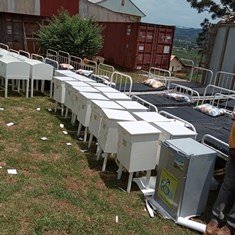
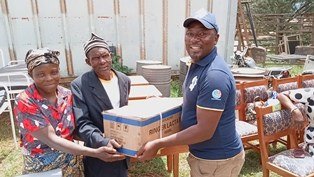
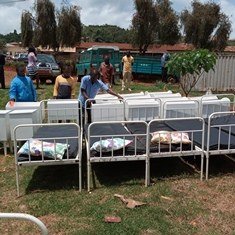
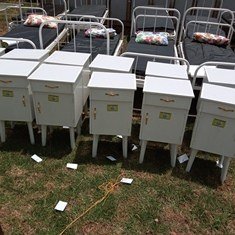
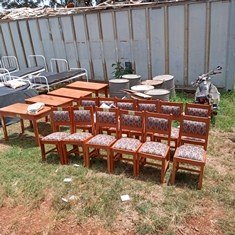
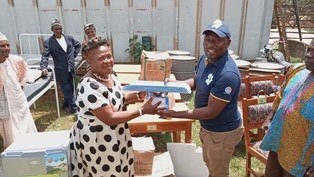
Beds, bedside cabinets, ward furniture, medical equipment and medication, handed over to the receiving health centres in the presence of community leaders and Rotary Club of Kumbo members.
See all the photos